Your Personal 1-on-1 Medical Tutor: Master the PLAB & UKMLA Exam or improve your clinicals with AI
Available Now on MedRevisions (Over a decade of experience in GMC assessments and a track record of helping thousands of doctors pass since 2019)
Imagine having a medical professor sitting next to you 24/7. A professor who knows exactly what you are studying, understands your weak spots, never gets tired of your questions, and has instant access to over 5,000+ exam-style questions and verified study notes.
Welcome to the MedRevisions AI Professor.
We have integrated this powerful, context-aware AI tool across our entire platform. It is not just a search bar; it is a dedicated study partner designed to transform how you learn medicine.



How It Works
The AI Professor is integrated directly into your study interface. You never have to switch tabs or lose focus.
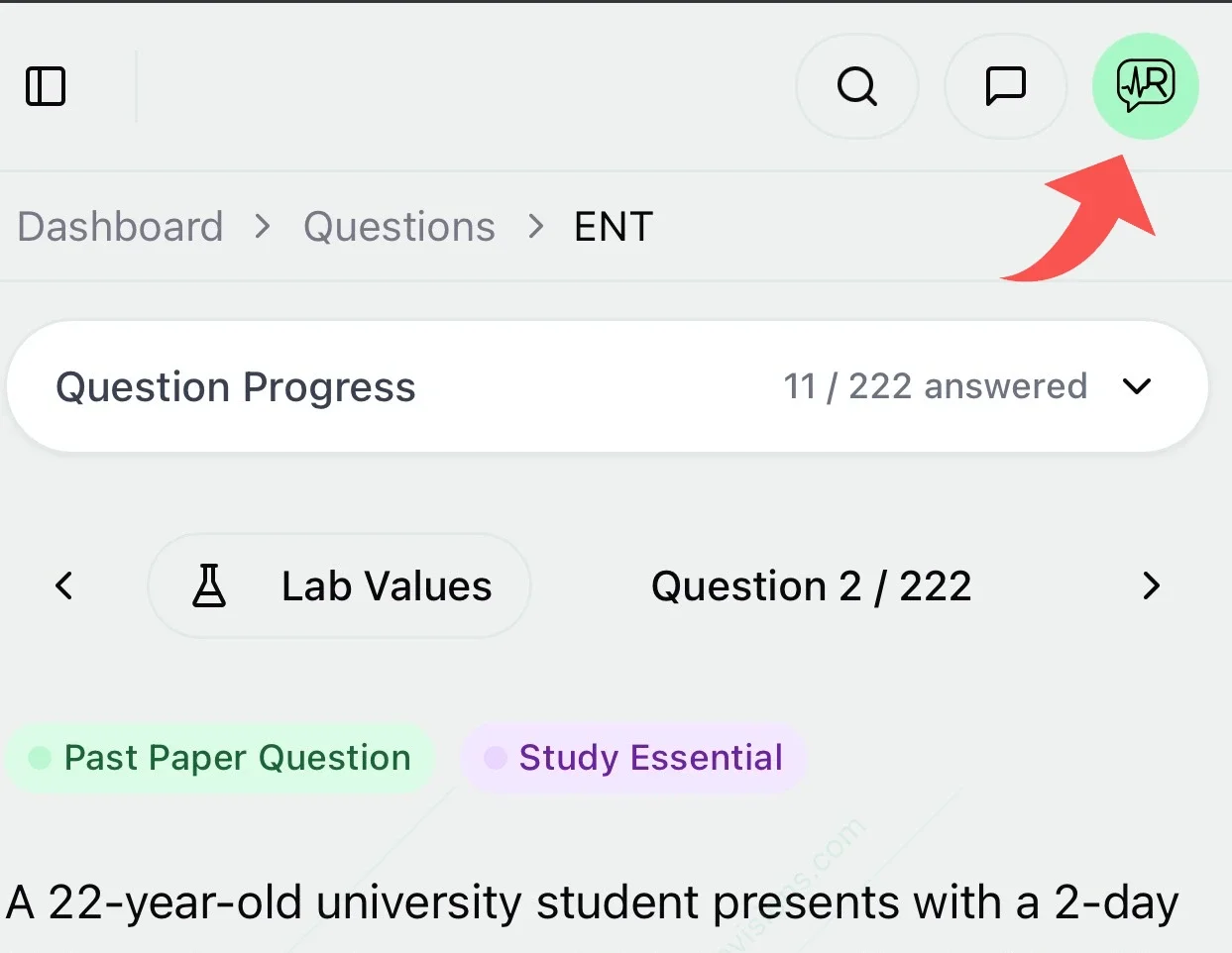
MedRevisions AI Professor interface
🟢 Always Ready: Look for the Green AI Icon in the top right corner of any question or study note.
📱 Mobile Optimised: Tap the Green AI icon in the top right corner of any question or study note on your phone to open a chat interface perfect for studying on the go.
🧠 Context-Aware: The AI knows which question you are looking at. If you ask, "Why is this wrong?", it knows exactly what "Option you chose" is without you explaining it.
💬 Treat It Like a Real Human Tutor
The most important thing to remember is this: Don't just search keywords. Talk to it.
The AI Professor uses Advanced AI technology to understand natural language and context. It knows which of our 5,000+ questions or Study notes you are currently looking at. If you get a question wrong, it knows why you got it wrong.
You can have a back-and-forth conversation. If you don't understand an answer, ask it to simplify. If you want to go deeper, ask for more details.
The prompts below are just starting points—feel free to take the conversation in any direction.
For PLAB & UKMLA Candidates: Your Strategic Exam Coach
You have access to 5,000+ questions and study notes. That is a goldmine, but it can also be overwhelming. The AI Professor acts as your filter and strategist. It helps you prioritise high-yield topics based on your weaknesses, fix your specific weaknesses, and save time.
1. Speed Revision & Summarisation
Running out of time before the exam? Use the AI Professor to condense detailed notes into high-yield cheat sheets.
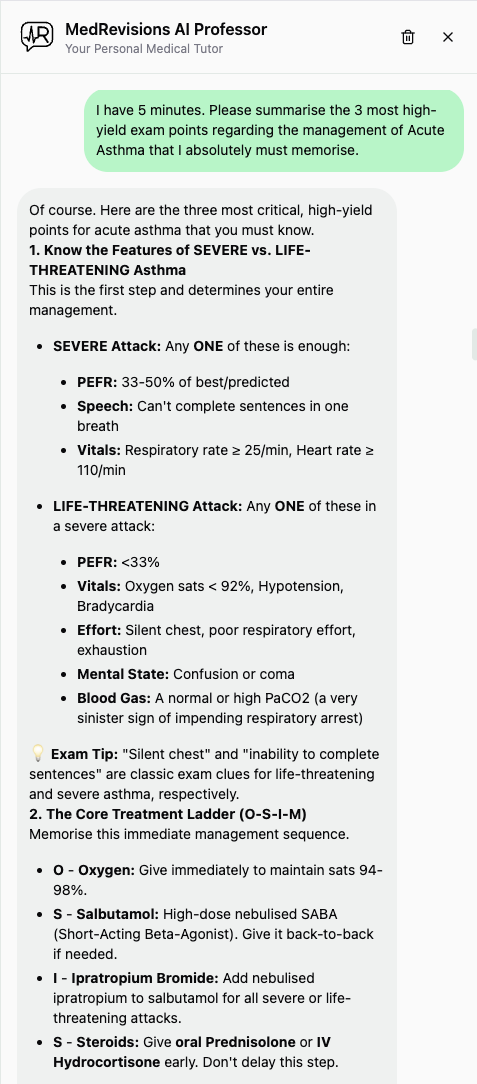
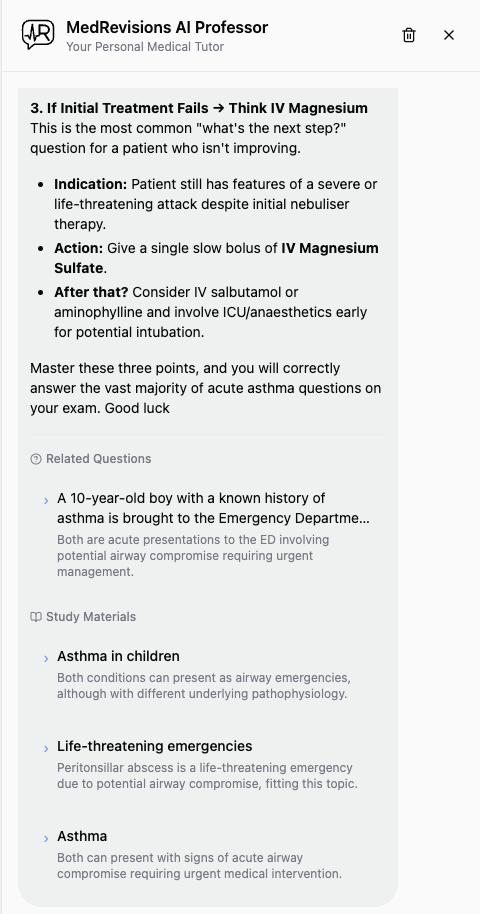
🗣️ You: "I have 5 minutes. Please summarise the 3 most high-yield exam points regarding the management of Acute Asthma that I absolutely must memorise."
🤖 MedRevisions AI Professor:
2. Solving the "Differentiation" Struggle
Candidates often get stuck between two very similar conditions. The AI Professor can spot the subtle differences instantly.
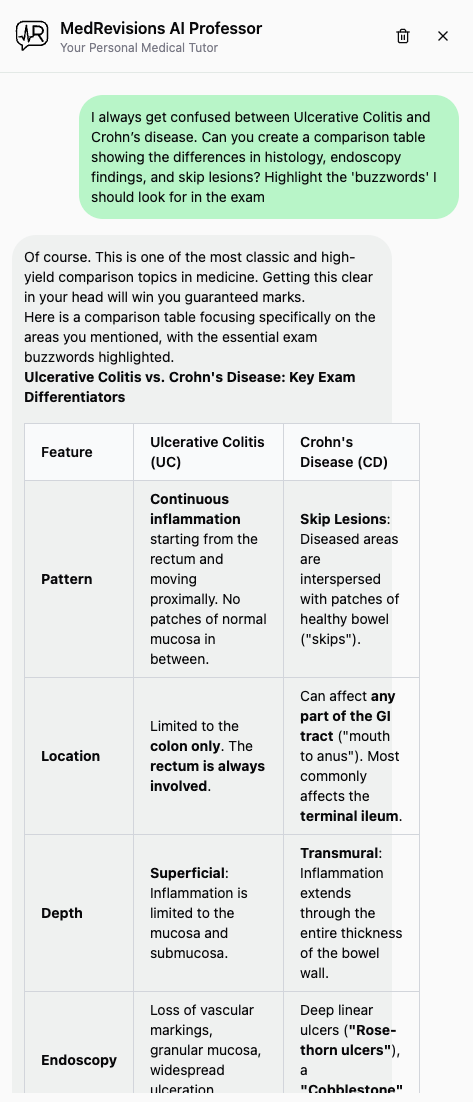
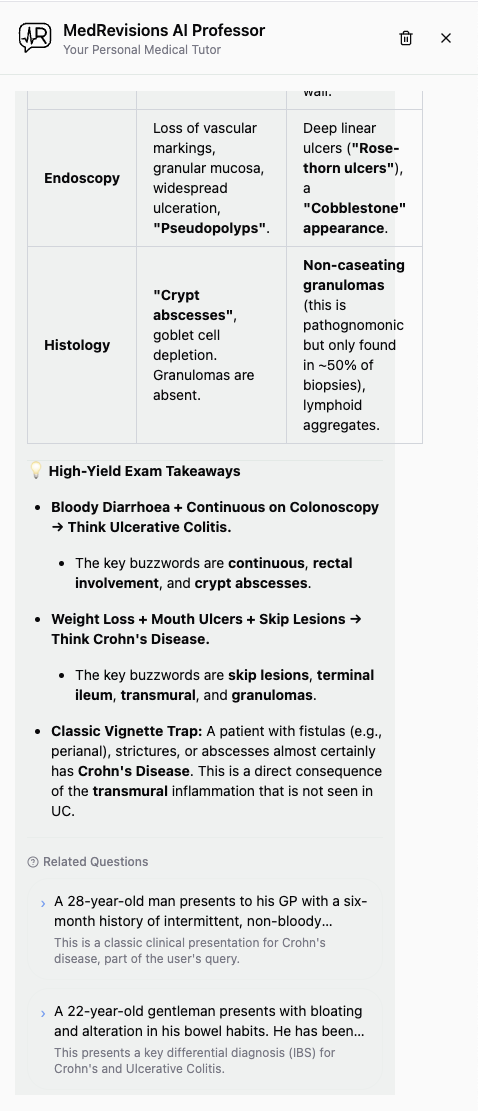
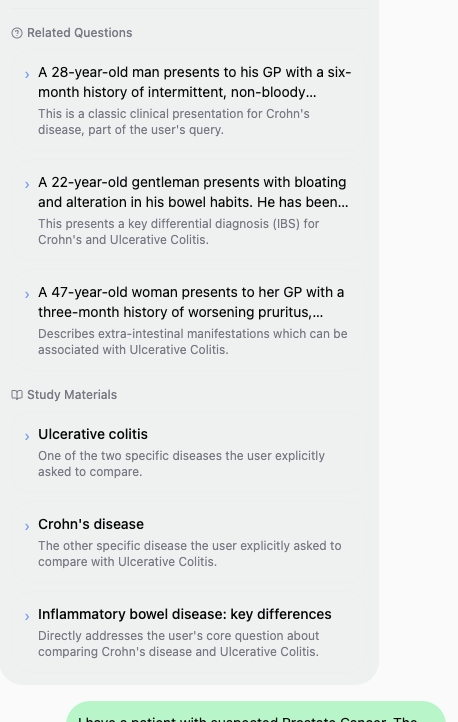
🗣️ You: "I always get confused between Ulcerative Colitis and Crohn’s disease. Can you create a comparison table showing the differences in histology, endoscopy findings, and skip lesions? Highlight the 'buzzwords' I should look for in the exam."
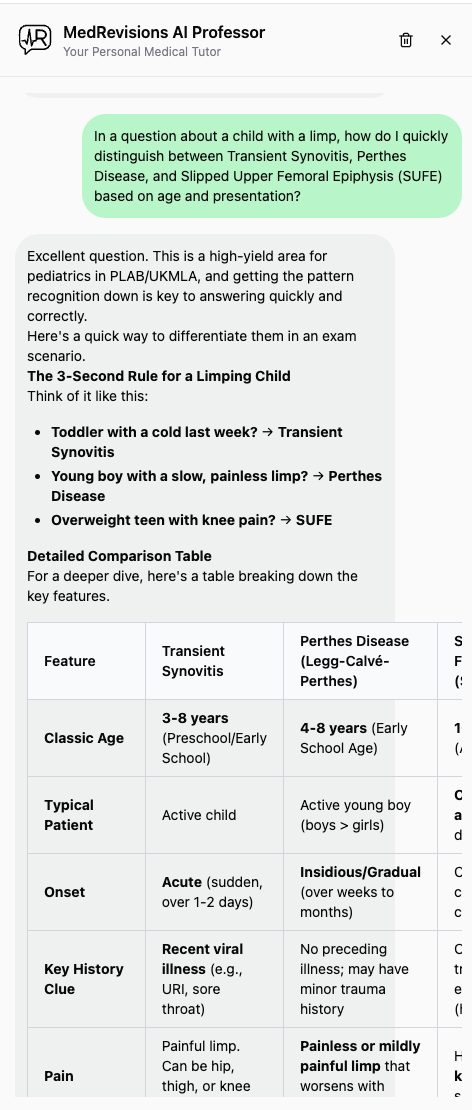
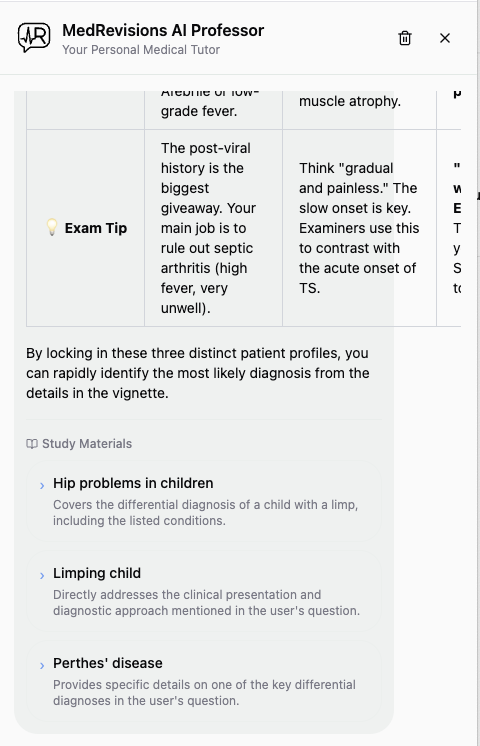
🗣️ You: "In a question about a child with a limp, how do I quickly distinguish between Transient Synovitis, Perthes Disease, and Slipped Upper Femoral Epiphysis (SUFE) based on age and presentation?"
🤖 MedRevisions AI Professor:
3. Avoiding the "Initial vs. Definitive" Trap
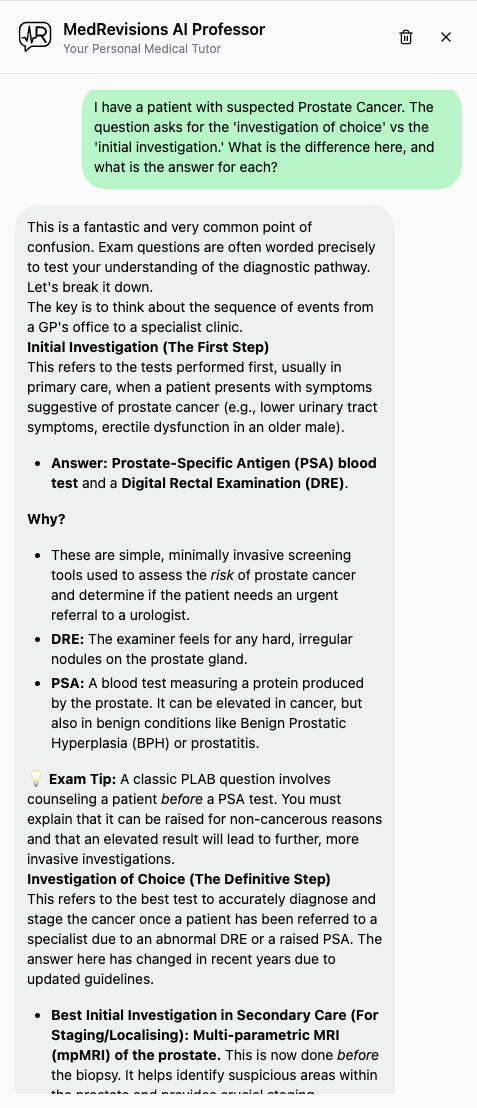
A classic exam trap is asking for the "initial investigation" versus the "definitive diagnosis." The MedRevisions AI Professor helps you recognise this nuance.
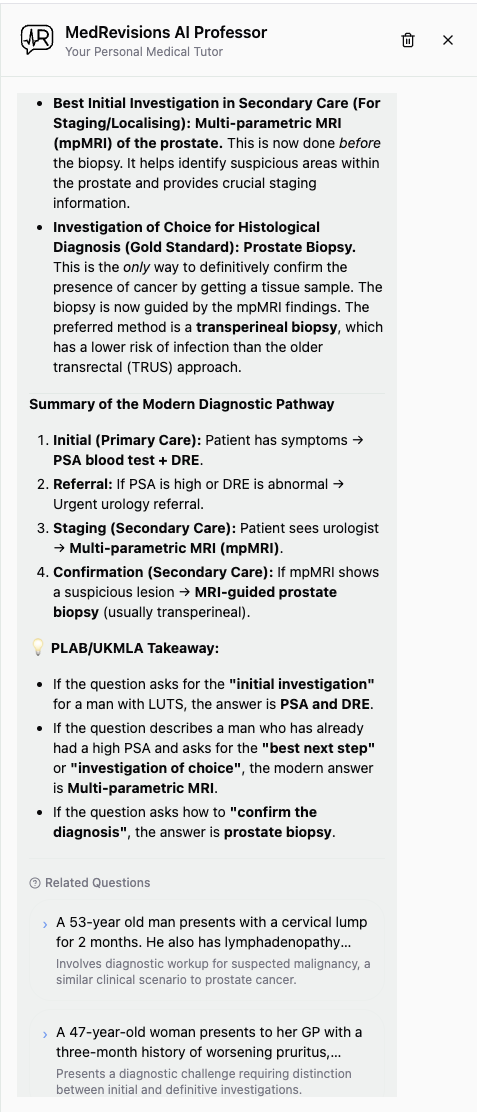
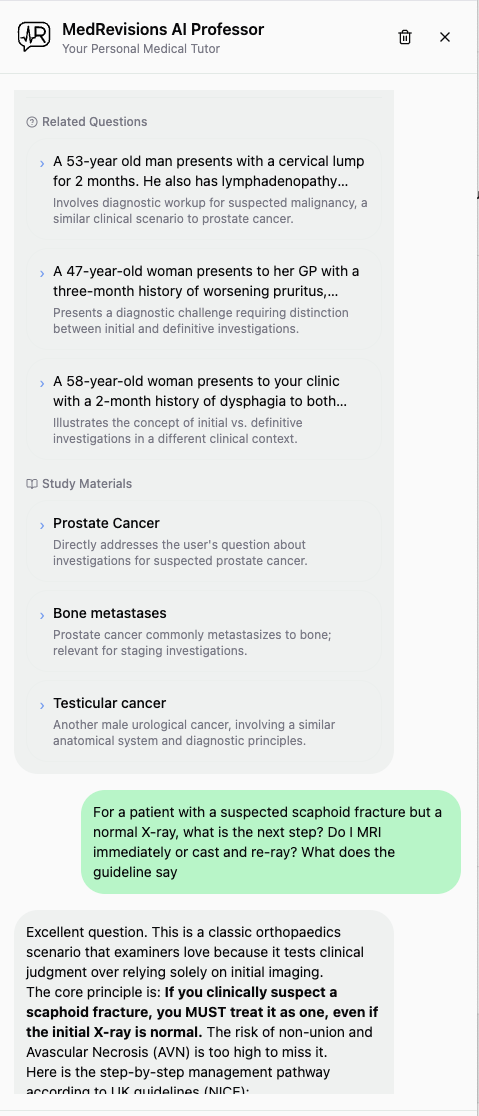
🗣️ You: "I have a patient with suspected Prostate Cancer. The question asks for the 'investigation of choice' vs the 'initial investigation.' What is the difference here, and what is the answer for each?"
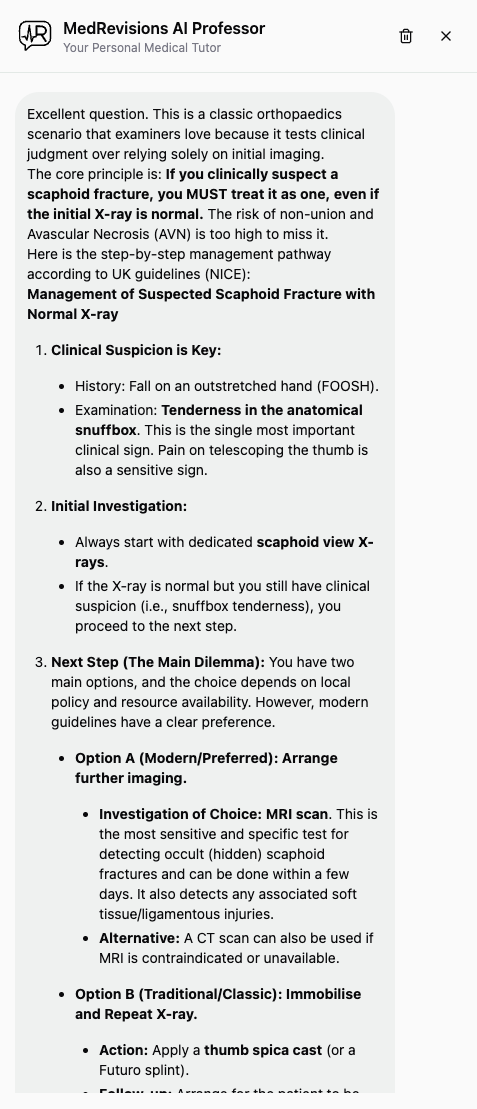
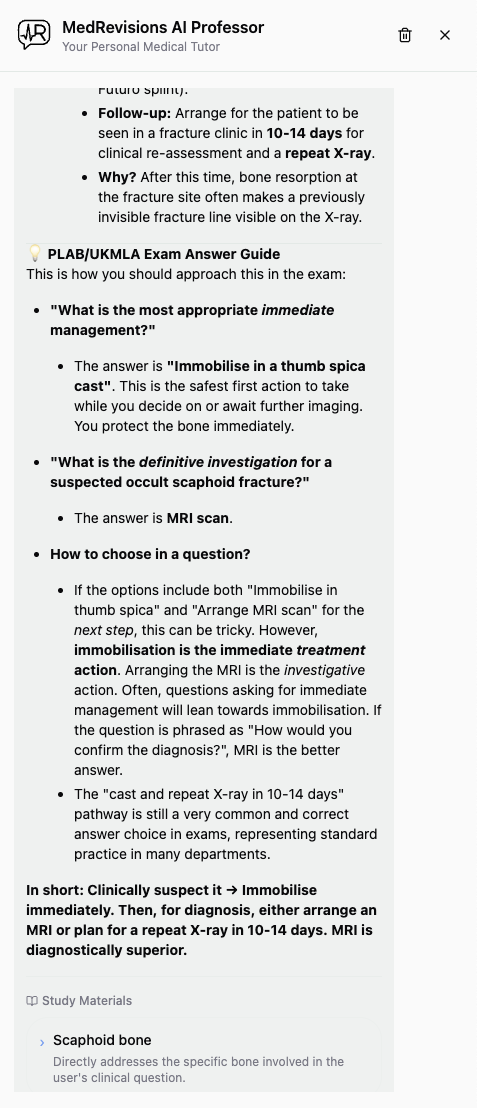
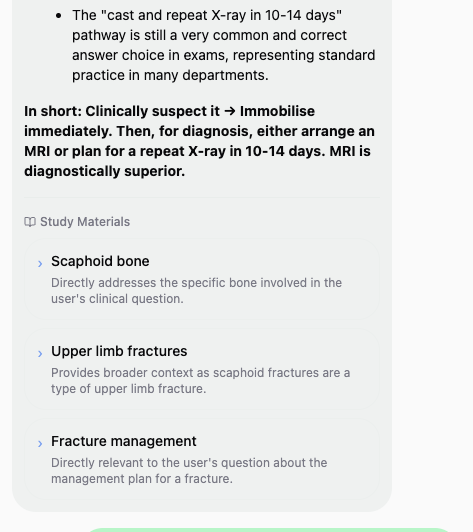
🗣️ You: "For a patient with a suspected scaphoid fracture but a normal X-ray, what is the next step? Do I MRI immediately or cast and re-ray? What does the guideline say?"
🤖 MedRevisions AI Professor:
4. Rapid Revision & Mnemonics
When you are in "cramming mode" and need to memorise lists quickly.
🗣️ You: "Give me a mnemonic to remember the causes of Pancreatitis and explain what each letter stands for."
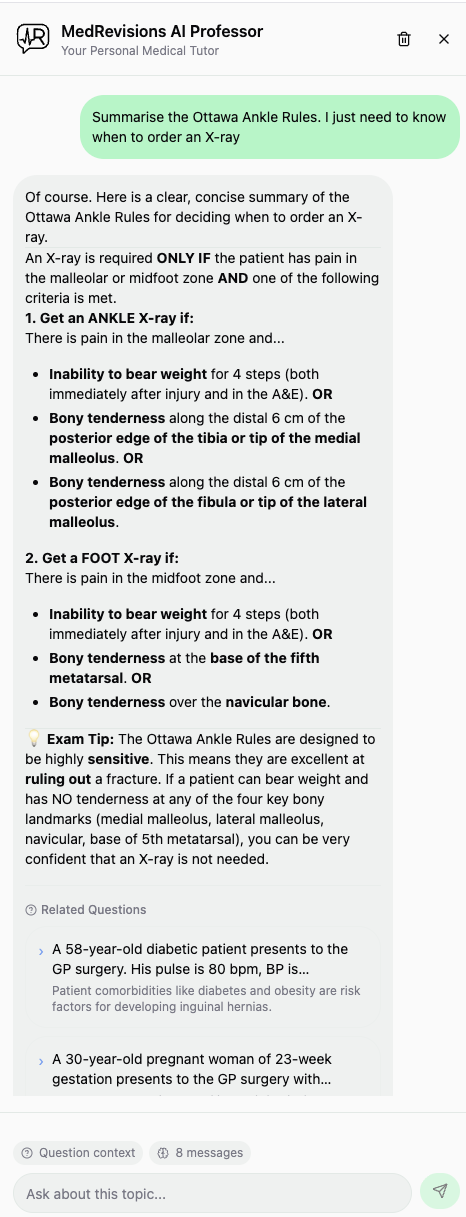
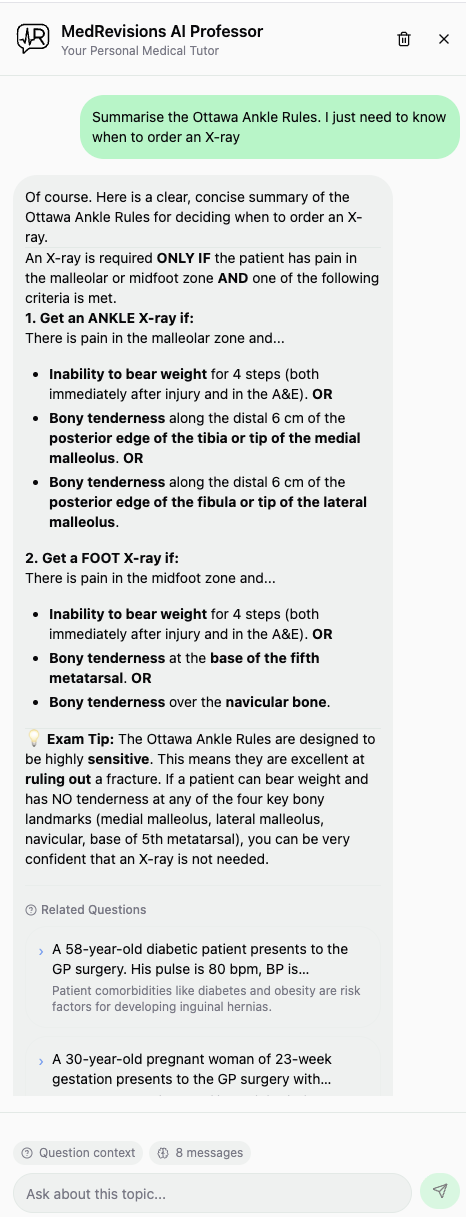
🗣️ You: "Summarise the Ottawa Ankle Rules. I just need to know when to order an X-ray."
5. Analysing Your Mistakes & Distractors
If you answer incorrectly, use the AI to fix your logic immediately.
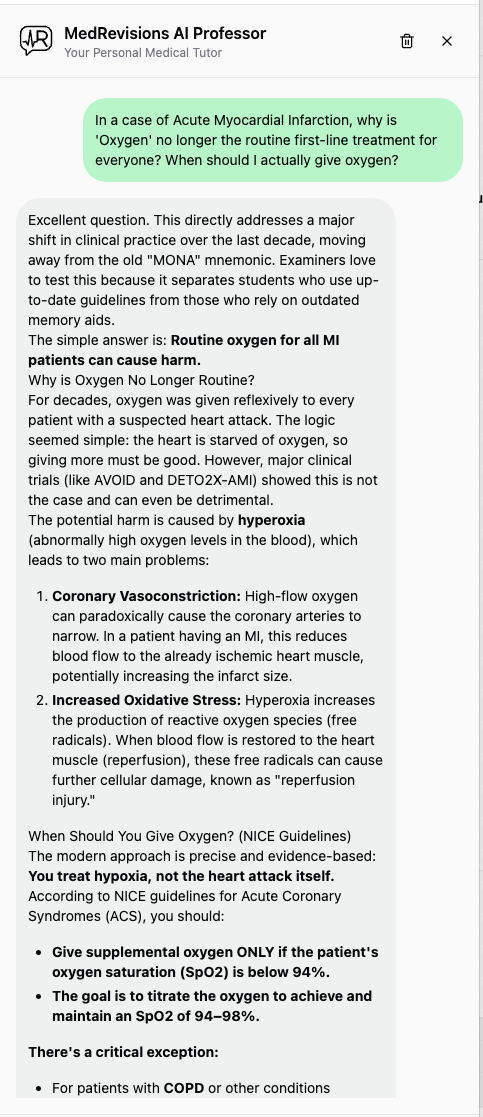
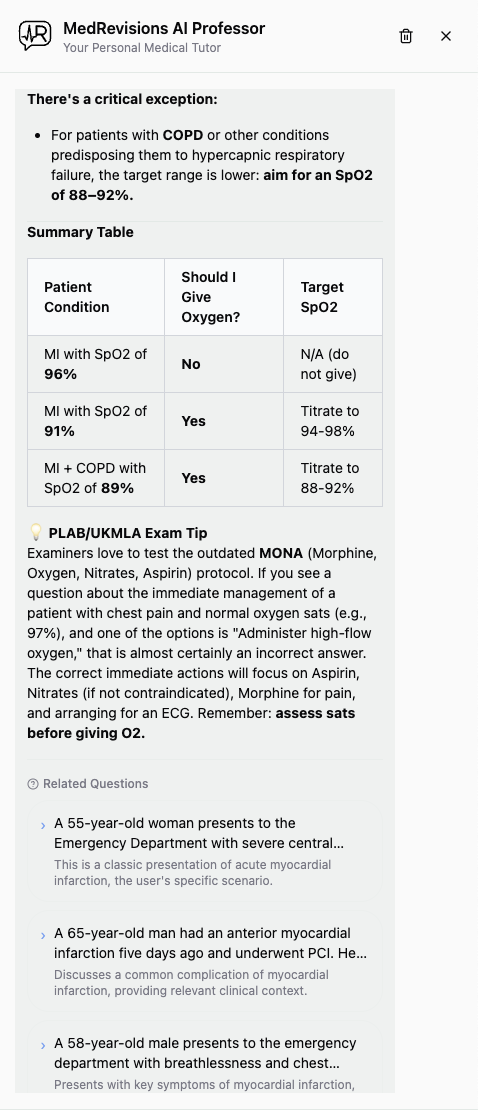
🗣️ You: "In a case of Acute Myocardial Infarction, why is 'Oxygen' no longer the routine first-line treatment for everyone? When should I actually give oxygen?"
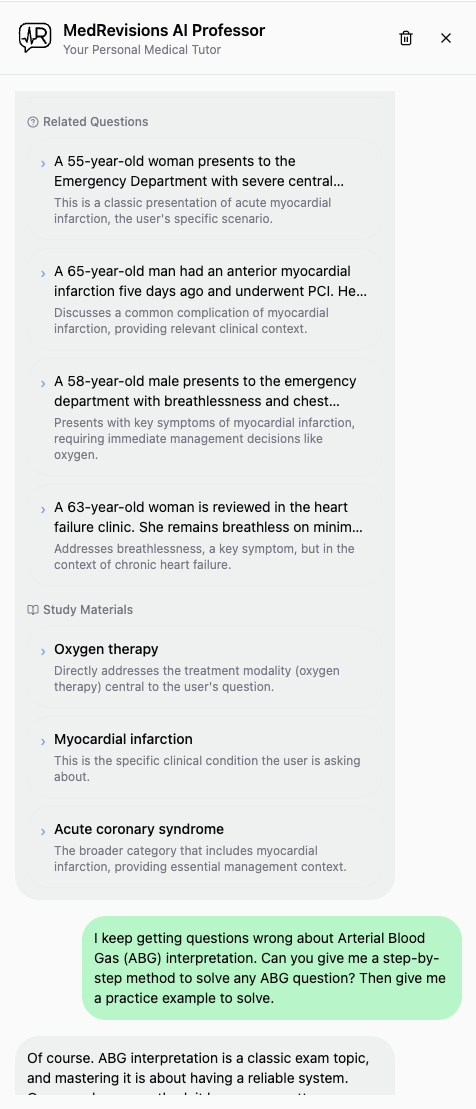
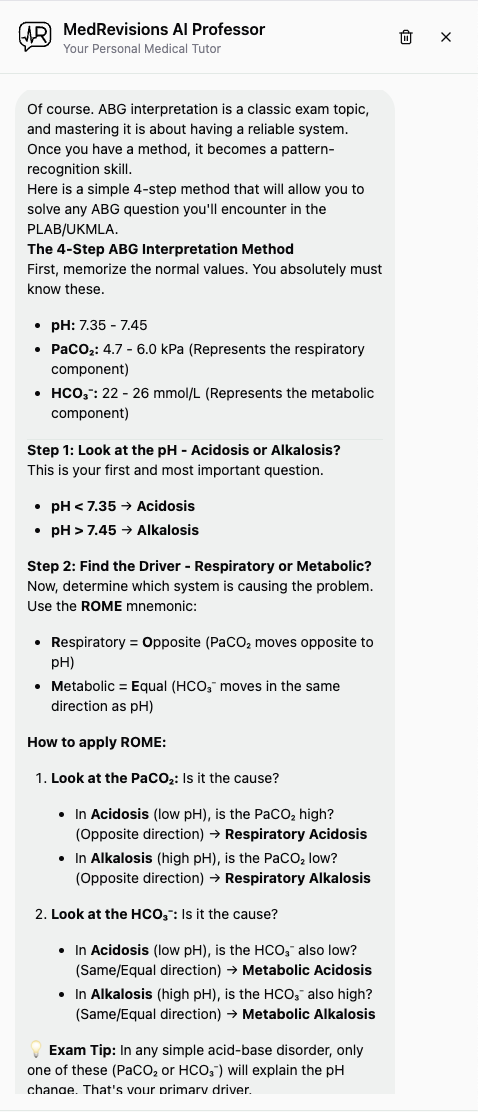
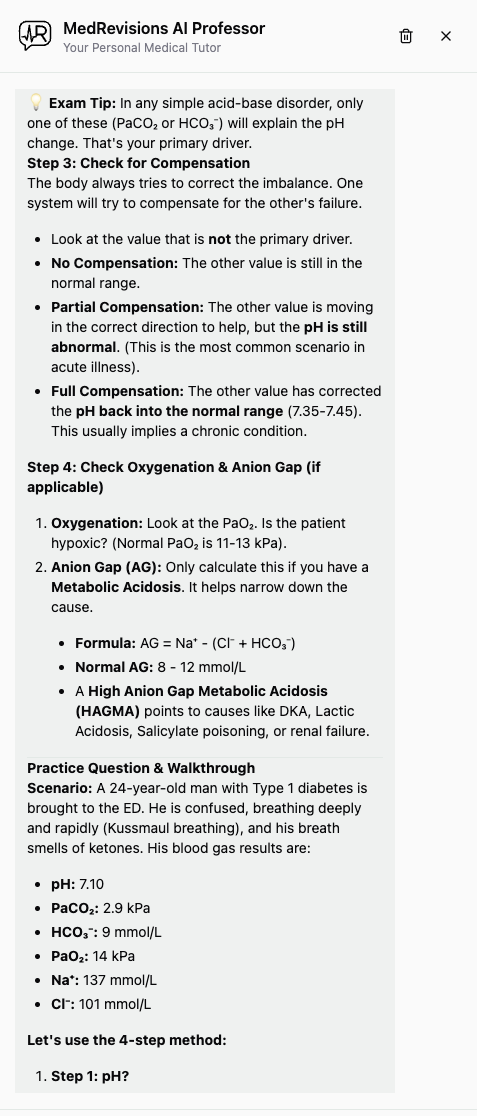
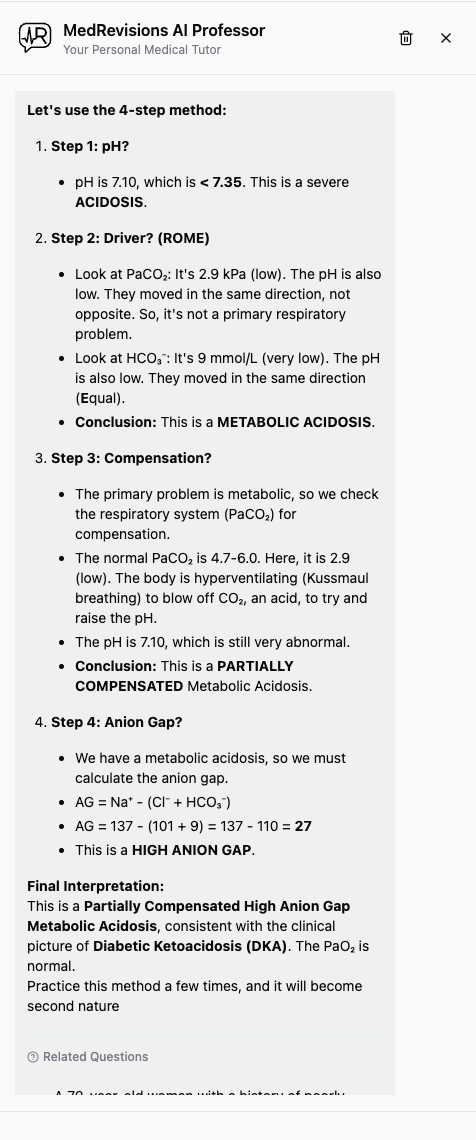
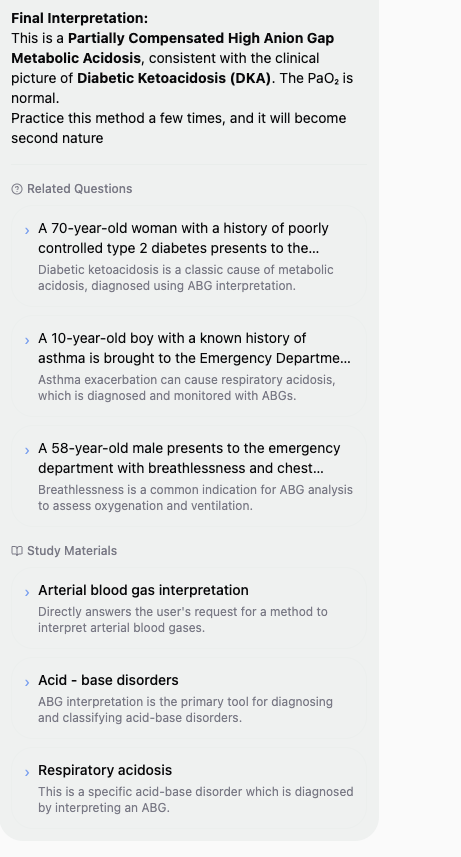
🗣️ You: "I keep getting questions wrong about Arterial Blood Gas (ABG) interpretation. Can you give me a step-by-step method to solve any ABG question? Then give me a practice example to solve."
🤖 MedRevisions AI Professor:
6. The "NICE Guideline" Check and Clarify Doubts
The PLAB/UKMLA exams are strict about current UK guidelines. Ensure your knowledge is up to date.
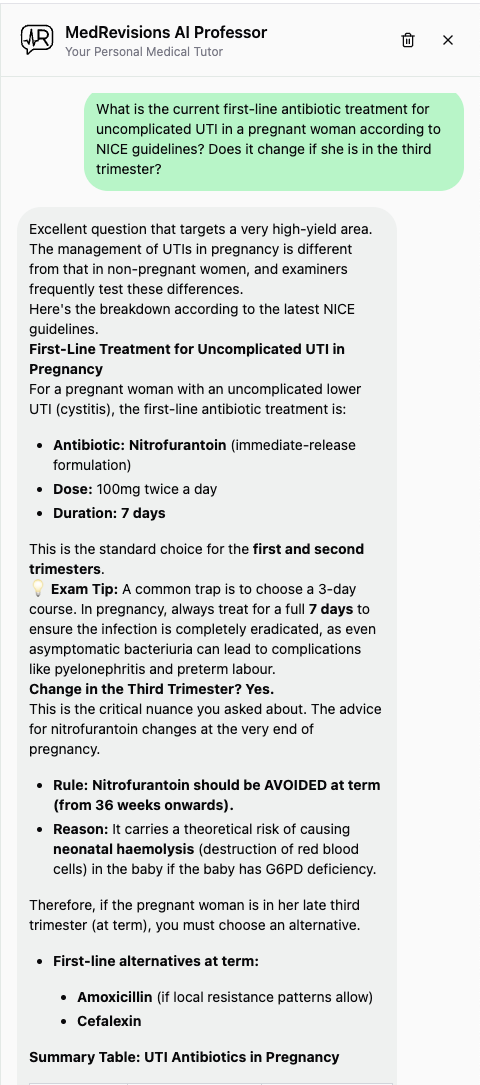
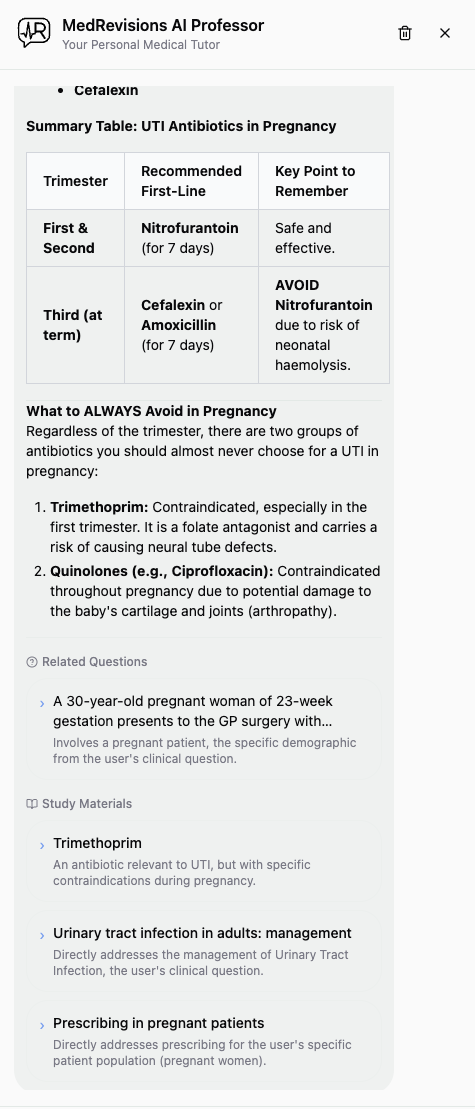
🗣️ You: "What is the current first-line antibiotic treatment for uncomplicated UTI in a pregnant woman according to NICE guidelines? Does it change if she is in the third trimester?"
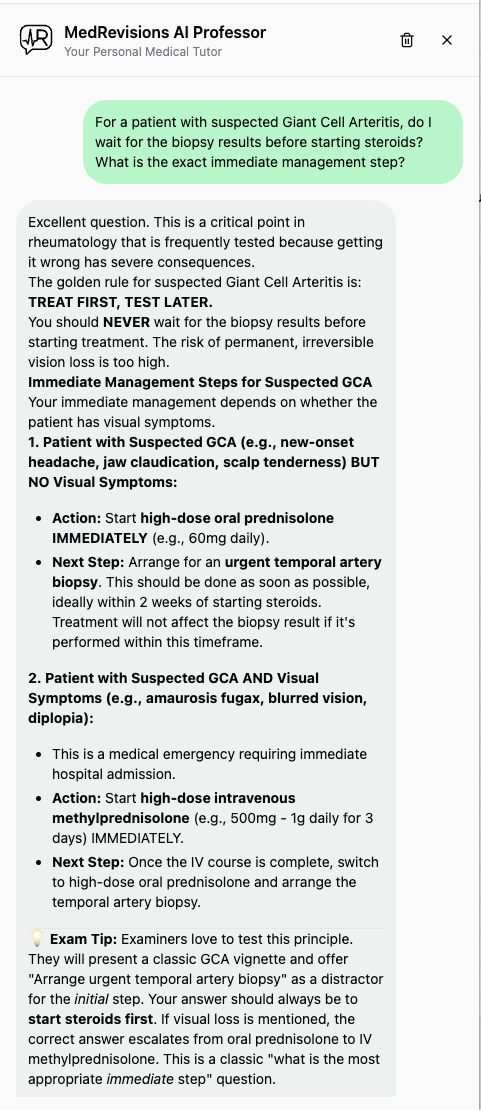
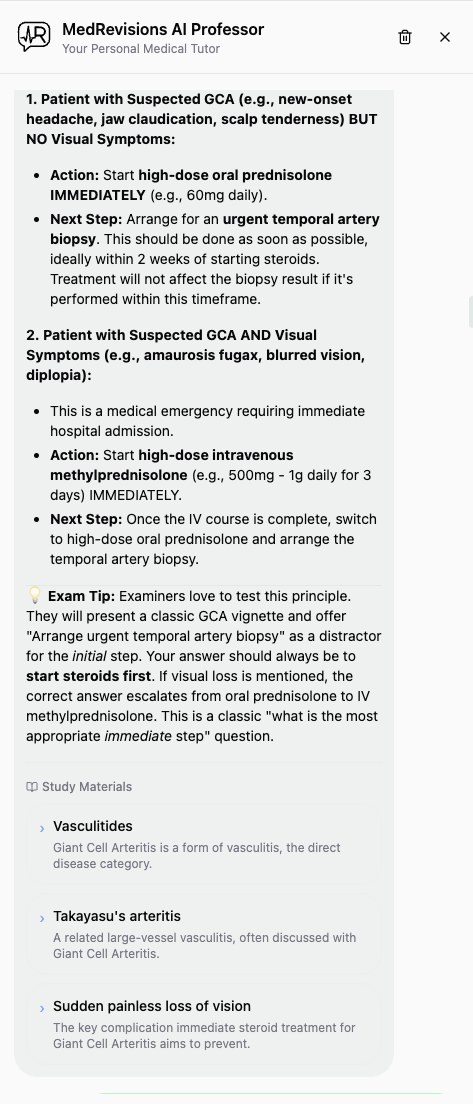
🗣️ You: "For a patient with suspected Giant Cell Arteritis, do I wait for the biopsy results before starting steroids? What is the exact immediate management step?"
🤖 MedRevisions AI Professor:
7. The "Personal Weakness" Analysis
When you answer a question incorrectly, don't just read the explanation. Ask the MedRevisions AI Professor to diagnose your specific gap in knowledge.
🗣️ You: "I really thought this was the answer. Can you explain specifically why my logic was wrong, and why Option E is the correct management according to the latest guidelines?"
🤖 MedRevisions AI Professor:
8. Infinite Practice (The Drill Sergeant)
If you are weak on a topic, don't just move on. Ask the MedRevisions AI Professor to grill you until you master it.
🗣️ You: "I keep getting Arrhythmia questions wrong. Can you generate a new clinical scenario involving Atrial Fibrillation and ask me how to manage it? Don't tell me the answer until I guess."
🤖 MedRevisions AI Professor:
For Medschool Students: From Textbooks to the Wards
Medical school can be overwhelming. You are learning biochemistry and physiology, but it is often hard to see how it applies to a real patient.
Use the MedRevisions AI Professor to "Reverse Engineer" clinical medicine. By tackling our clinical questions and asking the MedRevisions AI Professor to explain the basic science behind them, you will retain information better because you are attaching it to a real-world story.
1. The "Why" Behind the Disease (Pathophysiology)
Don't just memorise symptoms; understand the mechanism.
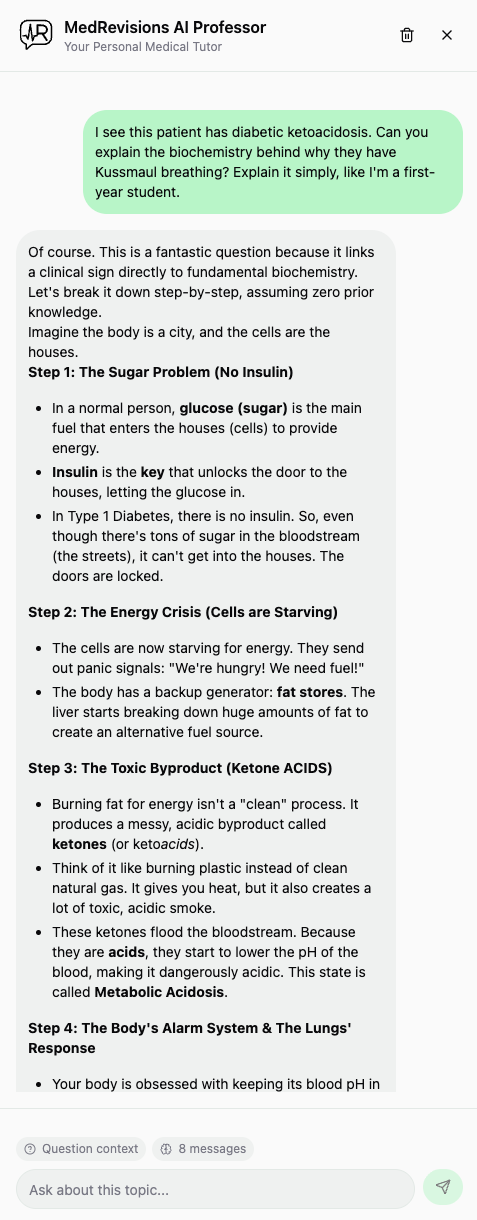
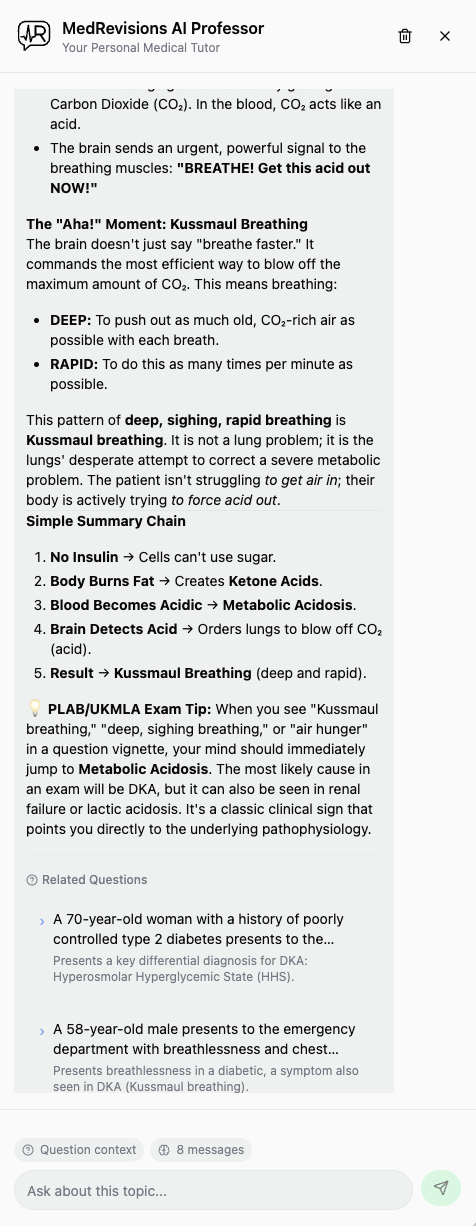
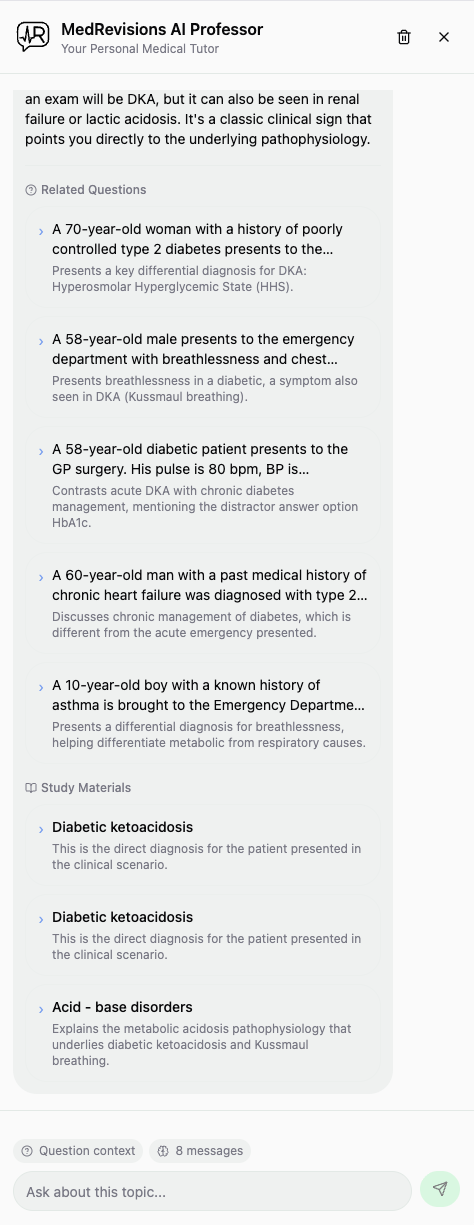
🗣️ You: "I see this patient has diabetic ketoacidosis. Can you explain the biochemistry behind why they have Kussmaul breathing? Explain it simply, like I'm a first-year student."
🤖 MedRevisions AI Professor:
2. Anatomy Visualization
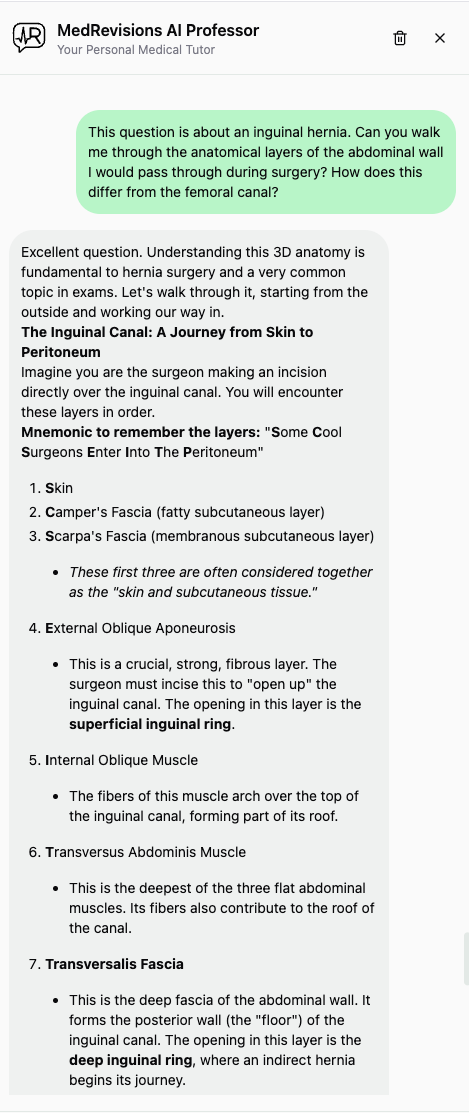
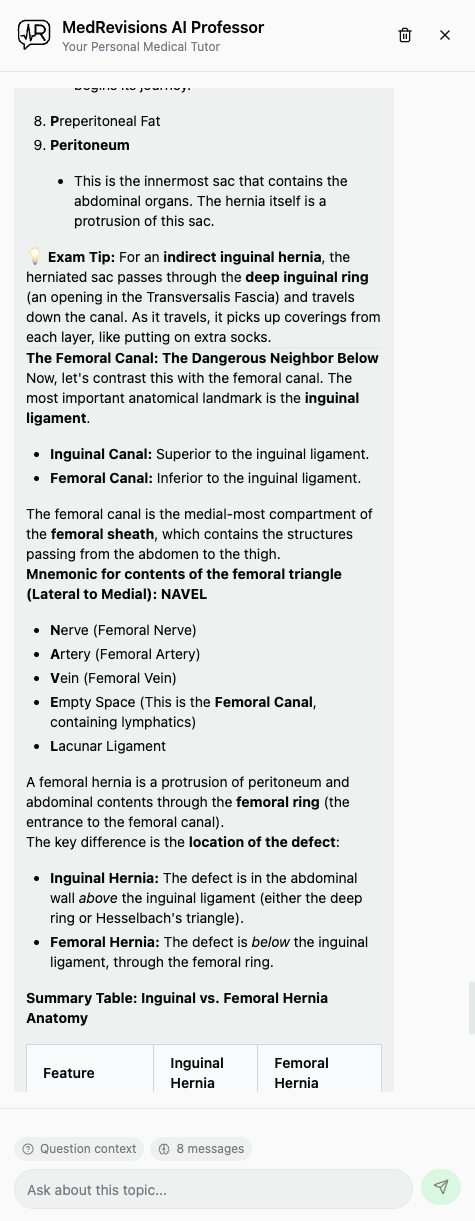
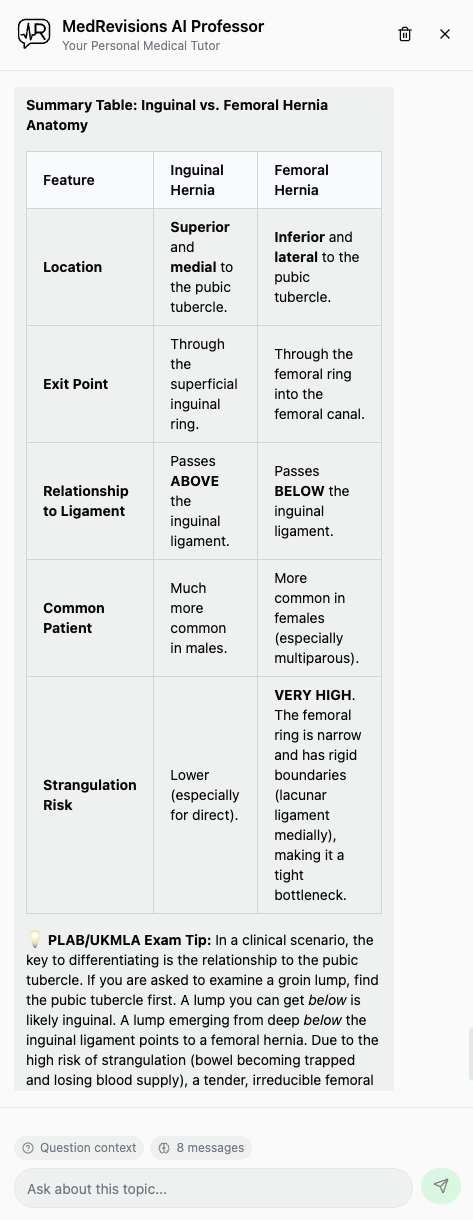
Turn a clinical text into an anatomy lesson.
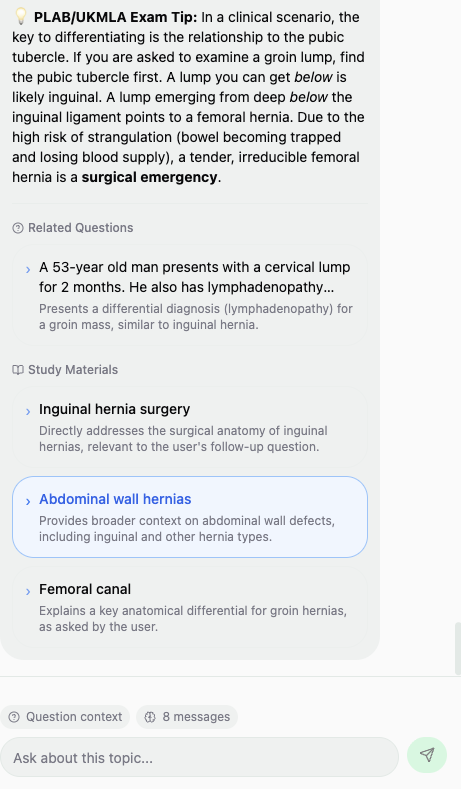
🗣️ You: "This question is about an inguinal hernia. Can you walk me through the anatomical layers of the abdominal wall I would pass through during surgery? How does this differ from the femoral canal?"
🤖 MedRevisions AI Professor:
3. Connect the Dots
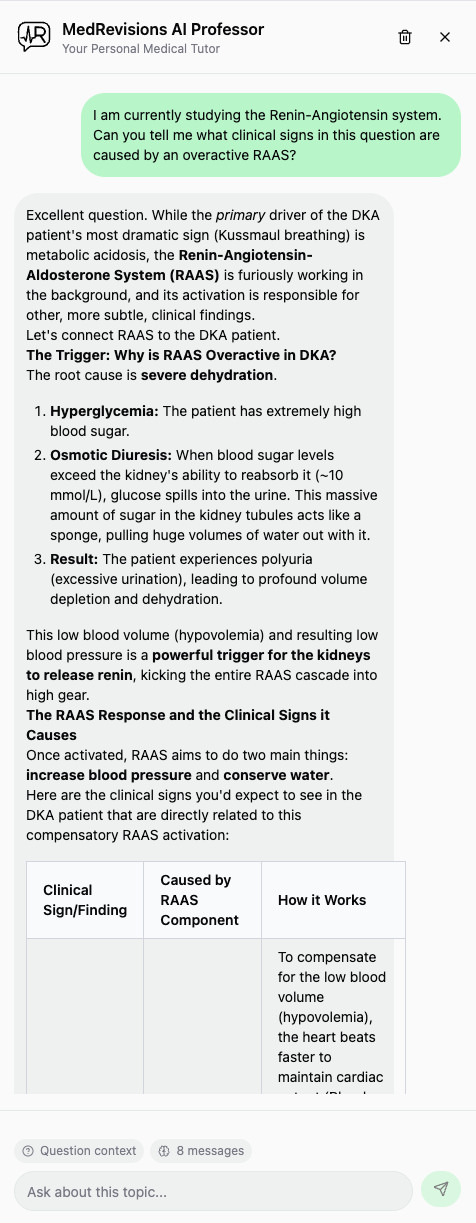
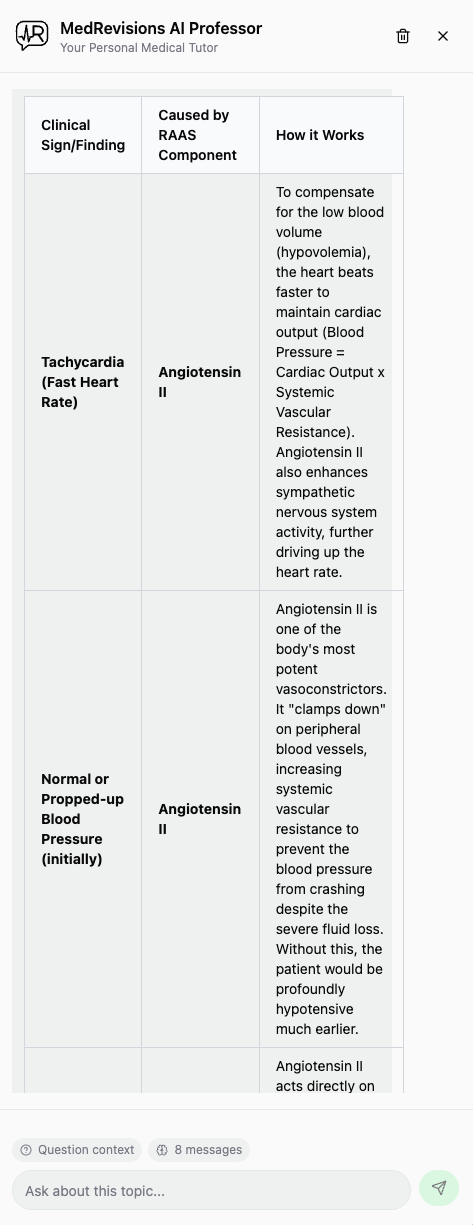
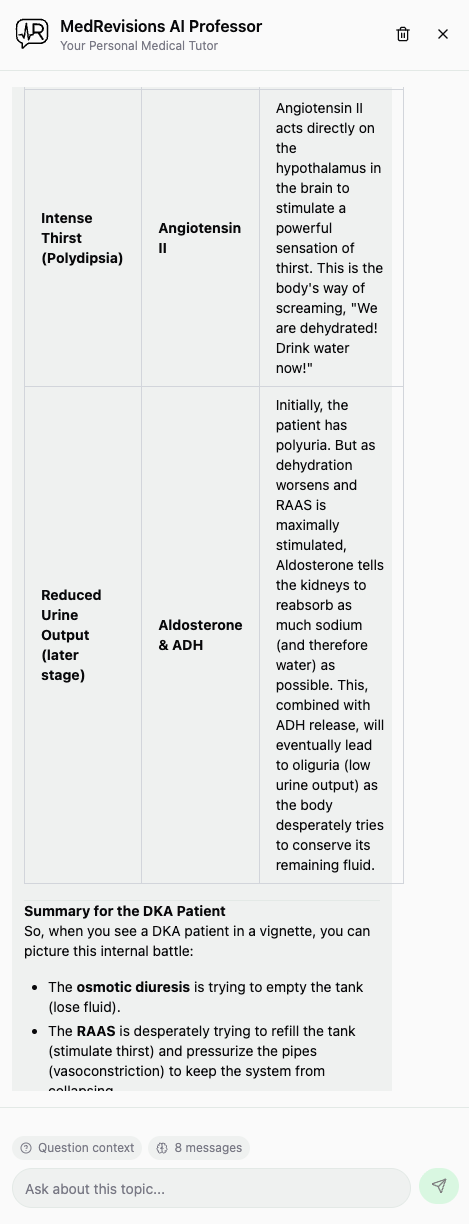
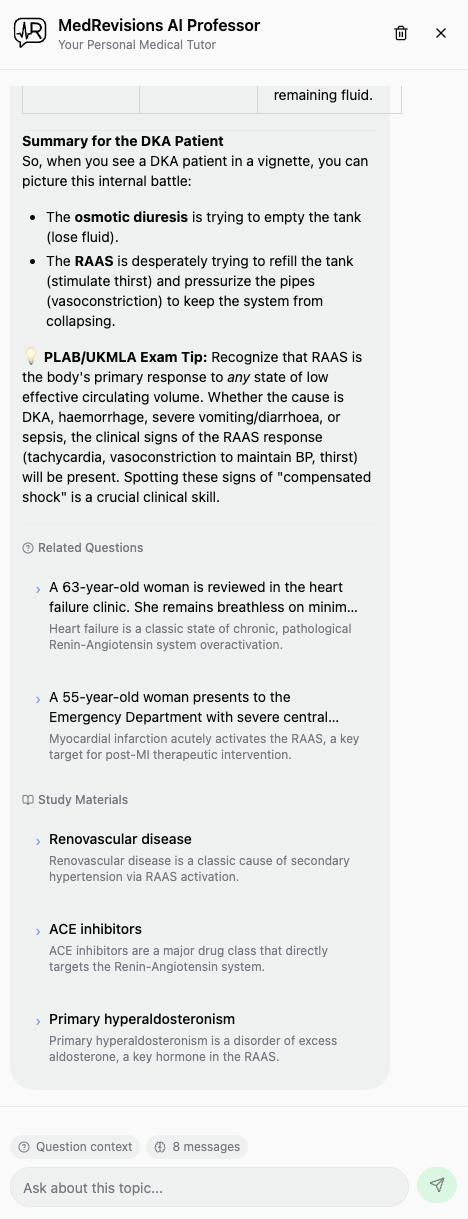
🗣️ You: "I am currently studying the Renin-Angiotensin system. Can you tell me what clinical signs in this question are caused by an overactive RAAS?
🤖 MedRevisions AI Professor:
Help Us Shape Your Perfect Tutor
The MedRevisions AI Professor is constantly learning, just like you. We want this tool to feel like a seamless extension of your brain.
We need your input.
Is the MedRevisions AI Tutor tackling your specific needs? Did it help you understand a concept that was confusing you?
Please email us at support@medrevisions.com with your feedback. We read every email and use your suggestions to build new features that help you pass your exam with confidence.
Ready to meet your new tutor?
Log in now and look for the Green Icon.
Try Before You Buy
Experience the difference yourself
We're so confident in our content—backed by over a decade of experience—that we want you to try it free.
70+ Sample Questions
Select Study Essential Topics.
Limited AI Tutor Access
Master the 80% That Matters Most with
Study Essential Mode.
Our updated Study Essential Mode lets you prepare efficiently by focusing on the highest-yield material first. This specialised mode filters our question bank to ~1800+ essential exam-style questions with accompanying explanations and updated notes, so you can cover all core PLAB 1/UKMLA topics from the MLA content map in a fraction of the time. Once you’ve mastered these fundamental concepts, you can reinforce your knowledge by tackling the remaining 3000+ questions in our bank to ensure thorough coverage.
Fast-Track to Passing: Master the core syllabus quickly with 1,800+ high-probability questions.
Build a Safety Net: Secure a passing standard first. Once you are safe, unlock the advanced library to push for a high score.
Optimized for Speed: The only study mode designed specifically for candidates with less than 3 months to prepare.

oscerevisions