The Ultimate PLAB Exam Guide (2026): Fees, Dates & UKMLA Changes
If you are an international doctor dreaming of a career in the UK's National Health Service (NHS), the Professional and Linguistic Assessments Board (PLAB) test is your gateway.
But the pathway is changing. With the introduction of the UKMLA (Medical Licensing Assessment), many candidates are confused. Is PLAB still valid? What is the new content map? How do I prepare?
This guide is the most comprehensive resource on the web. We break down the entire process—from booking your IELTS to securing your first NHS job.

1. What is the PLAB Test?
The PLAB test is designed to assess whether doctors who qualified abroad have the right knowledge and skills to practice medicine safely in the UK. It is conducted by the General Medical Council (GMC).
It consists of two parts:
PLAB 1: A written multiple-choice exam testing medical knowledge.
PLAB 2: A practical objective structured clinical examination (OSCE).
You must pass both parts to apply for a license to practice.
| Feature | The "Old" PLAB | The "New" PLAB (MLA Aligned) |
|---|---|---|
| Name on Booking | PLAB 1/PLAB 2 | PLAB 1/PLAB 2 (transitioning to UKMLA name later) |
| Syllabus Source | PLAB Blueprint | MLA Content Map |
| Focus | Diagnosis & Management | Clinical Reasoning, Health Promotion, Ethics, & Transgender Health |
| Difficulty | Moderate | Moderate-High (More "best single answer" nuance) |
Key Takeaway: You cannot study using old "PLAB" materials from 2020. You must use a question bank (like MedRevisions) that is updated for the MLA Content Map. Did you know the new UKMLA content is actually based on UK medical school finals? Read our deep-dive on The MSCAA Question Bank to understand the source of these new questions.
3. Eligibility Criteria: Do You Qualify?
Before you start studying, ensure you can even sit the exam.
Primary Medical Qualification (PMQ): Your medical degree must be from a university listed in the World Directory of Medical Schools.
English Language Proficiency:
IELTS Academic: Minimum 7.5 overall (with 7.0 in each section).
OET Medicine: Minimum Grade B in all sections.
GMC Account: You must create a GMC Online account to book the test.
4. Step-by-Step Pathway to GMC Registration
Pass English Test (IELTS/OET): This unlocks your GMC account.
Book PLAB 1: Slots are released quarterly. They vanish in minutes. Be ready!
Sit PLAB 1: Held in the UK and overseas (India, Pakistan, Nigeria, Egypt, etc.).
Book PLAB 2: Can only be booked after passing PLAB 1.
Sit PLAB 2: Held only in Manchester, UK. You will need a Standard Visitor Visa.
Apply for GMC Registration: Once you pass PLAB 2, you have 2 years to apply for your license.
Check out some November 2025 exam style questions here:
PLAB 1 & UKMLA Clinical Scenario: Mastering Hypertension Management
PLAB 1 & UKMLA Clinical Scenario: Hair Loss in Gender-Affirming Therapy
5. PLAB 1: The Exam Structure & Syllabus
TFormat: 180 Single Best Answer (SBA) questions. Duration: 3 hours. Pass Mark: Variable (usually around 60-65%, or roughly 110-116/180).
What is Tested?
The exam covers the common conditions a doctor at the Foundation Year 2 (FY2) level deals with. It is not a specialist exam.
High-Yield Topics (MLA Aligned):
Acute Medicine: Sepsis, Chest Pain, Shortness of Breath.
Ethics: Capacity, Consent, Confidentiality (GMC Good Medical Practice).
Chronic Diseases: Hypertension, Diabetes, Asthma.
New Topics: Transgender Health, Genetics, Palliative Care.
6. PLAB 2: The Clinical Exam
Format: 18 OSCE stations (8 minutes each). Location: Manchester, UK.
This exam tests your communication and practical skills. You are not just tested on "knowing" the diagnosis, but on "explaining" it to a patient.
Common Stations:
Breaking Bad News
Medical Error & Apology
Simman (Mannequin) - Acute Emergency (e.g., Sepsis, Anaphylaxis)
Practical Skills (e.g., Catheterization, Venepuncture)
| Item | Cost (Approx) | Notes |
|---|---|---|
| IELTS/OET | £200 - £350 | OET is more expensive but often considered easier. |
| PLAB 1 Exam Fee | Change from £279 to £283 (Effective April 1, 2026). | Payable to GMC. |
| PLAB 2 Exam Fee | Change from £986 to £1,036 (Effective April 1, 2026). | Payable to GMC. |
| MedRevisions Qbank | £30 - £60 | Essential for PLAB 1 prep. |
| Flights & Visa | £1,000+ | Variable based on location. |
| GMC Registration | Change to £481 (Effective April 1, 2026) | Depending on when you graduated. |
Total Estimated Cost: £3,000 - £4,000 (excluding PLAB 2 academy fees). Note: Fees increase every April. Book before March 31st to save ~£50.
8. Study Resources & Preparation Strategy
How long do I need?
PLAB 1: 3 to 6 months.
PLAB 2: 1 to 2 months (usually in the UK).
Recommended PLAB Resources
Free Study Materials: Want to check your knowledge level before starting? Access our Free PLAB/UKMLA Resource Hub for PDF study schedules, notes, and sample questions.
Question Bank (Essential): You need a bank that mirrors the exam format. MedRevisions offers 5,000+ questions aligned with the MLA map. We have been helping candidates pass the PLAB exam since 2019
GMC Good Medical Practice: Read this for Ethics.
Patient.info / CKS NICE: For reading up on guidelines.
Pro Tip: Don't use too many resources. Stick to one comprehensive question bank and the official guidelines. Using 5 different books will confuse you.
Inside MedRevisions
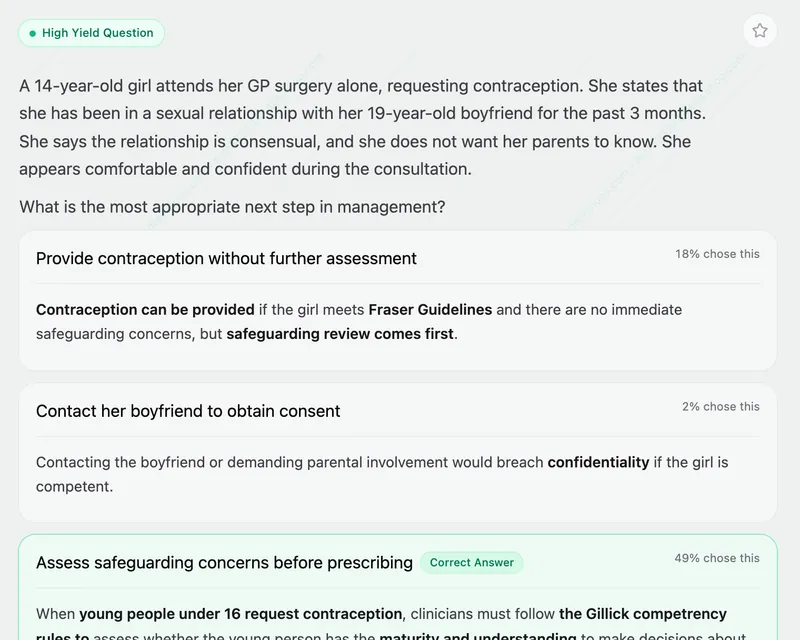
Questions
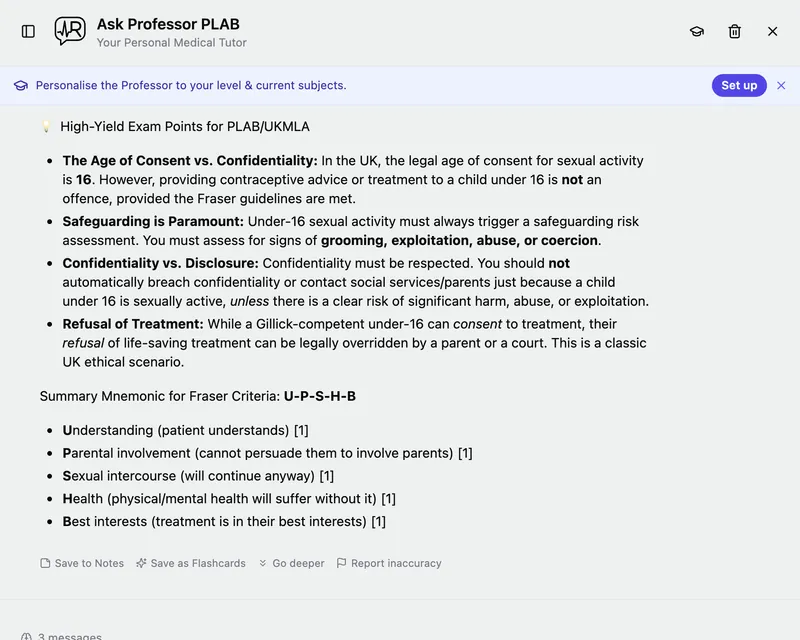
AI Professor
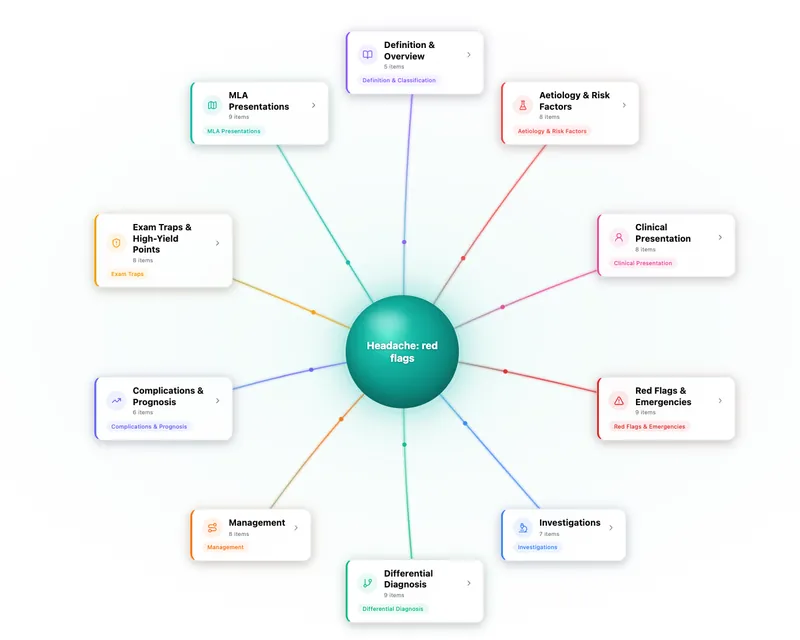
Mind maps
9. Life After PLAB: Finding Your First Job
Passing PLAB is just the beginning.
Steps to Employment:
GMC Registration: Apply immediately after passing PLAB 2.
NHS Jobs: Create a profile on
jobs.nhs.uk.The "CREST" Form: If you haven't done an internship, you may need this signed to enter training.
Junior Clinical Fellow (JCF): Most IMGs start in a non-training JCF job to get NHS experience before applying for specialty training.
Average Salary (2025/2026)
FY2 Level / SHO: Approx. £38,000 - £45,000 base salary + extra for on-calls/nights.
10. Real Success Stories: From Exam to Employment
The path from PLAB 1 to NHS employment is achievable with the right strategy.
In a recent post to the PLAB/MLA Community, Dr. Rahul Pillai shared his inspiring journey of passing both exams and securing a job in the UK.
Dr. Rahul Pillai’s Strategy for the PLAB 1 exam: "MedRevisions Only"
Dr Pillai passed his PLAB 1 with MedRevisions on his second attempt, using MedRevisions as his sole resource. His approach perfectly demonstrates the power of focused study: Dr. Rahul Pillai’s Journey and strategy.
The Lesson: Don't be discouraged by low initial mock scores. Use them as a diagnostic tool. If you follow a structured plan like Dr. Shavini did, your scores will improve.
11. Frequently Asked Questions (FAQ)
Q: Is the PLAB exam difficult? A: PLAB 1 has a pass rate of around 60-70%. It is not "impossible," but it requires focused preparation on UK-specific guidelines. PLAB 2 is often considered harder due to the communication nuances.
Q: Can I work in the UK without PLAB? A: Only if you have a sponsorship (MTI), a postgraduate qualification (MRCP/MRCS), or are from the EEA/Switzerland. For most IMGs, PLAB is the standard route.
Q: Does MedRevisions cover the new November 2025 topics? A: Yes. We update our bank within days of every exam diet. We recently added topics like Transgender Health and Isotretinoin Safety based on candidate feedback about recent exam themes.
Start Your Journey Today
Don't let the new MLA changes scare you. With the right roadmap and the right resources, the NHS is within your reach.
Try It For Free
You don't need to wait until your final year to think like a doctor.
Log in to MedRevisions today. Open any question and look for the Green AI Icon. Ask it to explain the "why" behind the diagnosis, etc.
Experience the difference yourself
We're so confident in our content, written by doctors since 2019, that we want you to try it free.
70+ Sample Questions
Select Study Essential Topics
Limited AI Tutor Access
All you need to pass your exam.
MedRevisions runs specialised platforms tailored to each medical licensing exam — pick the one that matches yours.
PLAB Revisions
For doctors trained outside the UK preparing for PLAB 1 and PLAB 2 to register with the GMC.
What's included
- 5,400+ PLAB-style SBAs mapped to the latest 2026 MLA content map
- New questions added every exam cycle, reflecting emerging exam themes
- Study notes, mindmaps, flashcards and a personal AI tutor
- Trusted by 30,000+ candidates since 2019
UKMLA Revisions
For UK medical students preparing for the UKMLA Applied Knowledge Test (AKT) — the new GMC-mandated exam for graduating doctors.
What's included
- 5,400+ AKT-style SBAs mapped to the latest 2026 MLA content map (430 conditions, 220 presentations)
- Mocks optimised for Paper 1 and Paper 2
- New questions added every exam cycle, reflecting emerging exam themes
- Study notes, mindmaps, flashcards and a personal AI tutor
- Trusted by 30,000+ candidates since 2019
OSCE Revisions
For PLAB 2, UKMLA CPSA, AMC Clinical and medical-school OSCEs — rehearse stations out loud, not just on paper.
What's included
- AI voice patients with examiner-style scoring on every station
- 1,800+ stations with doctor-written revision notes, frameworks and mind maps
- Full mock circuits in your real exam format — PLAB 2, CPSA, AMC or custom
- Free to try: 3 voice + 3 text AI attempts, no card required
Am I eligible for PLAB 1 before finishing my internship?
Yes. You can sit the PLAB 1 exam as long as you have your Primary Medical Qualification (PMQ) and a valid English Language Test (OET/IELTS). You do not need to have completed your full internship to sit Part 1. However, you will need evidence of internship (or equivalent experience) later when you apply for full GMC registration.
What is the required IELTS/OET score for PLAB 1?
IELTS Academic: Minimum overall score of 7.5, with at least 7.0 in each section (Speaking, Listening, Reading, Writing).
OET Medicine: Minimum Grade B in all four sub-tests.
Note: Your certificate must be less than 2 years old on the day you book the exam.
Do I need a GMC UK Reference Number to book?
Yes. You must create a GMC Online account first. Once the GMC validates your passport and English scores, they will give you a reference number. You cannot see or book exam seats without this.
Is there an age limit for the PLAB exam?
No, there is no upper age limit. As long as your medical degree is recognized by the World Directory of Medical Schools and you meet the criteria, you can sit the exam.
How much does the PLAB 1 exam cost in 2026?
As of April 2025/2026, the fee is approximately £268 (subject to annual GMC updates). International centres may charge an additional hosting fee.
Why do I see "No Seats Available" when I log in?
PLAB 1 seats are in extremely high demand, especially in India, Pakistan, Nigeria, and Dubai. Seats often vanish within minutes of release.
Pro Tip: Do not rely solely on "Batch Release" dates. Cancelled seats appear randomly on the GMC portal daily. Check frequently.
Can I take the exam in a different country?
Yes. You can book a seat in any GMC-approved center worldwide. For example, an Indian citizen can take the exam in the UK or UAE. However, you are responsible for securing the necessary Visitor Visa for that country.
How many times can I attempt PLAB 1?
You have a maximum of 4 attempts. If you fail all 4, you must submit a special application demonstrating "additional learning" (usually a clinical attachment or Master’s degree) to get one final attempt.
Is PLAB 1 a difficult exam?
The pass rate for PLAB 1 generally hovers between 65% and 75%. While it is not designed to "trick" you, it is strictly time-pressured (180 questions in 3 hours). The challenge is not just knowledge, but speed and stamina.
What is the passing score for PLAB 1?
There is no fixed percentage (e.g., 60%). The GMC uses the Angoff Method, where the pass mark is determined by the difficulty of that specific paper. Historically, the pass mark ranges between 110 and 118 out of 180 questions.
Are there negative marks for wrong answers?
No. There is no negative marking in PLAB 1. You should never leave a question blank—always make an educated guess if you are unsure.
Is the exam computer-based or paper-based?
In the UK: It is fully computer-based (Pearson VUE style).
International Centres: Most are transitioning to computer-based, but some locations may still use OMR (Paper) sheets.
Check your booking confirmation carefully. It is expected that in 2026, all the centres will transition to computer-based; however, GMC UK has not officially made the change.
Does MedRevisions cover the "Ethics & Professionalism" topics?
Absolutely. The new syllabus places heavy weight on Good Medical Practice, Duty of Candour, and Safeguarding. These require specific knowledge of UK Law and Ethical guidance, which is fully covered in our Question Bank.
How long should I study for PLAB 1 in 2026?
Most candidates require 3 to 4 months of consistent study (2-3 hours a day) alongside work. If you are studying full-time, 6-8 weeks may be sufficient using our "Study Essential Mode." However, we do recommend you start early.
Do I need to read the Oxford Handbook of Clinical Medicine?
While it is a great reference, it is often too dense for revision. MedRevisions notes are condensed specifically for the exam, focusing only on the "High-Yield" points you need to score marks.
When will I get my PLAB 1 results?
Results are typically released 6 weeks after the exam date. You will receive an email notification to check your GMC Online account.
If the UKMLA launches fully, is my PLAB 1 pass still valid?
Yes. Your PLAB 1 pass is valid for 3 years. Even if the exam name officially changes to UKMLA AKT for everyone, the GMC has confirmed that valid PLAB 1 passes will be accepted for entry to Part 2 (CPSA).
Can I apply for jobs immediately after passing PLAB 1?
No. Passing PLAB 1 only allows you to book PLAB 2. You can only apply for GMC Registration and jobs after passing PLAB 2.


May 2026 NICE Guideline Update

January 2026 NICE Guideline Update


August 2025 PLAB & UKMLA Exam Update – New Questions, Topics & Updated Resources


Official 2026 PLAB 1 / UKMLA AKT exam schedule. Includes confirmed dates (Feb & May), updated fees, and a live tracker for seat releases in India, Pakistan, Nigeria, and the UK.

UK Medical Licensing Assessment (UKMLA) exam

What is the MSCAA Exam? Free Official Practice Papers + 2026 Guide

UKMLA and PLAB Clinical Question to Preclinical Medicine

Is the 1 PLAB exam based on the MLA content map? How to prepare for it?

Clinical Scenario: A 28-year-old pregnant woman presents with constipation that has failed to resolve with dietary changes. She is passing hard stools and straining.
The Challenge: Do you know the correct NICE Stepped-Care Pathway for laxatives in pregnancy? Is Bisacodyl safe, or should you start with Ispaghula?
Test your knowledge on this high-yield PLAB 1 / UKMLA prescribing scenario.
November 2025 PLAB 1 Exam Style Question

Sepsis Fluid Resuscitation – A High-Yield UKMLA/PLAB Scenario (February 2025 Exam Question)
See what verified PLAB/UKMLA candidates are saying
-
⭐️⭐️⭐️⭐️⭐️
"I had just 3 months. I started Medrevisions in 'Essential Mode' and filtered the questions to about 1800. I was able to pass with this strategy. If I had more time, I could have scored even higher!"
Dr. Muneer Ahmad
Exam Date: 07 August 2025
-
⭐️⭐️⭐️⭐️⭐️
"With the help of this Qbank, I did not need to refer to any external books. The library is good enough and covers everything you need to know. I highly recommend this."
Dr. Sania Ijaz
Exam Date: 22nd May 2025
-
⭐️⭐️⭐️⭐️⭐️
"I am so happy that I subscribed. The real exam wasn't any different from what I studied in MedRevisions. Each and every topic was covered."
Dr. Muhammad Adeel
Exam Date: 07 November 2024
-
⭐️⭐️⭐️⭐️⭐️
"MedRevisions was quite helpful for PLAB1 prep as it had all the necessary notes alongside high yield questions required to ace the exam. First went through the notes from each section followed by questions to help retention. The notes were really helpful in refreshing theoretical knowledge from medschool which allowed going through questions without any difficulty."
Dr. Arham Nadeem
Exam Date: 07 November 2024
-
⭐️⭐️⭐️⭐️⭐️
"I failed the first attempt while using another material. I avoided MedRevisions initially because people said it was 'time consuming,' but I decided to give it a go for my second attempt. Thank God I did—I cleared the exam."
Dr. Paula
Exam Date: 23rd May 2024
-
⭐️⭐️⭐️⭐️⭐️
"Not only did it boost my knowledge, but it revolutionised my concepts. It changed the whole PLAB game for me. Amazing study resource."
Dr. Waqar Mehmood
Exam Date: 08 August 2024
-
⭐️⭐️⭐️⭐️⭐️
"I used ******** in my first attempt...passed on my second attempt by adding Medrevision. I only wish I did Medrevisions earlier because it was so much easier and faster to cover everything. It builds you step-by-step."
Dr. Rahul
Exam Date: 20 February 2025